Monday, June 30, 2025

Old Songs 2025: My Top Ten

The Old Songs Festival of Traditional Music and Dance, held the last weekend in June each year outside of Albany, New York, on the Altamont Fairgrounds, is the folk festival that I have attended most frequently in my life -- having gone nearly every summer when I was growing up -- and against which I judge all other music festivals.

Since moving to Illinois,  I have only been to the festival infrequently.  In 2019, we had a good group: my wife, my parents, a hammered-dulcimer-loving uncle, and some good friends.  Last year and again this year, I flew out, and my father and I attended just the two of us. 

The audience has changed a lot in the four decades that I have been going.  The people who were in their 30s and bringing their kids when I was growing up are now in their 70s, and most of the kids don't seem to come anymore.  (I did get to see one nice moment where someone was documenting two grandparents attending the festival with their teenage grandchild.)  While the crowd is greyer these days, the soul of the festival remains very consistent: evening concerts on Friday and Saturday with no competing events (bringing everyone to Main Stage), and then 11 -- eleven! -- areas going during the day on Saturday and Sunday.  Performers make a lot of appearances: if you like someone that you see on Friday evening, you can probably see them do a solo set on Saturday morning, teach a hands-on workshop on Saturday afternoon, and then get thrown into a group workshop on Sunday.  I love the multiple opportunities to see artists and, in particular, the magical musical moments that happen when different groups who have been thrust onto the same workshop stage together get into each other's grooves.

This year's festival also benefitted from generally great weather: just a touch of rain on Friday, overcast on Saturday, and then sunny on Sunday.  Although one of the nice things about Old Songs is that a lot of the event spaces are indoors -- providing somewhere to hear music when it's really raining -- it's still nice to not end up all soggy at any point.

I've done my best to distill a weekend of music into a top ten list.  Without further ado:

(10) Bob Blue and Tom Smith's "Itsy Bitsy Spider" Retelling

On Saturday, I attended the "Sing Along with the Folk Song Society of Greater Boston," which -- as I expected it would be -- was a pleasant flashback to my Friday nights at the Black Diamond Folk Club in Birmingham, England, during my sabbatical there two years ago.  (My experiences at the Black Diamong are something that I thought I would describe on this blog and yet never have gotten around to writing about.)

One of the first numbers was a song set to the tune of Stan Roger's "The Mary Ellen Carter" telling the story of the resilience and persistence of the Itsy Bitsy Spider.  The singer attributed it to Bob Blue; the internet also gives credit to Tom Smith, so I've named him above.

(9) Vanaver Caravan

Bill and Lydia Vanaver founded the Vanaver Caravan in 1972, and the group has very regularly graced the Old Songs' stage with dance programs that typically center around Appalachian clogging but that also stretch out into other forms of American and world dance.

Bill Vanaver died just two weeks before the festival.  To see the young dancers, the not-so-young musicians, and Lydia carrying on the tradition during the Saturday night concert was really moving.  

May Bill's legacy carry on for many more years.

(8) "Resistance is Not Futile"

I've learned a lot of labor and protest songs over the years at Old Songs.  One of the last workshops on Sunday -- entitled "Resistance is Not Futile" -- was dedicated to the theme.  It featured the Rev. Robert B. Jones Sr., Claudia Schmidt, Magpie, and Reggie Harris & Pat Wictor (pictured at right during their Friday evening concert performance).

Magpie sang a song about the 1970 killings at Jackson State University that took place 10 days after the much more well known killings of anti-war protestors at Kent State.  

Reggie Harris and Pat Wictor played Phil Ochs' "Another Age," bringing new life to a song that strikes me as having lyrics that are very much of its era. 

And then Kim Harris joined Reggie and Pat on stage for the workshop closer -- "This Little Light of Mine."

(7) Liam Purcell & Cane Mill Road

No Depression has called Liam Purcell & Cane Mill Road "the future of bluegrass."  They are some damn fine pickers.  During their closing set on Saturday night, they told us how two shared loves had brought the band together: (1) a love of Taco Bell and (2) a love of New Grass Revival.  Liam Purcell (mandolin) and Zack Vickers (banjo) went on to show off some serious Sam Bush / Bela Fleck action.  

The band's harmonies were also super-tight, and I loved the Darrell Scott song "Helen of Troy, Pennsylvania" -- about two high school boys encountering a recent divorcée -- that they plaed during their Saturday morning set.

(6) "We Learned This From"

On Sunday morning, we spent some time with Andy Cohen, Roy Book Binder, and Sally Rogers.  (Sally's husband Howie Bursen, who was also supposed to be a part of the workshop, had come down with a cold.)

Roy Book Binder talked about traveling with and learning from the Rev. Gary Davis.  He started off by saying how hard it was to get Rev. Davis to teach him "Delia" and then had to yell at his fingers for wanting to play the very similar "Cocaine Blues."

Andy Cohen talked about making the decision to become a blues musician after hearing the Folkways LP of Studs Terkel interviewing Big Bill Broonzy.

Sally Rogers first sang "Crossing the Bar," Rani Arbo's beautiful setting of Alfred, Lord Tennyson's poem. She later told the story of writing "Love Will Guide Us" after hearing Helen Schneyer sing a song that she had taken out of a southern hymnal but which Sally found a little too Jesus-focused.  "Love Will Guide Us" is now in the Unitarian hymnal (page 131).

And after a comment on how much she loves playing music for people, Sally regaled us with the story of the time that she and Howie were audited by the IRS.  It turned out that the government owed them over $600.  At the end of the audit, the accountant said, "I just have one question.  Why do you guys do this?  You don't make any money..."  They have not been audited since.

(5) "Remembering John Roberts"

Another major loss in the Old Songs family was the passing, in early February, of John Roberts, who had been preceded in death three years earlier by his long-time singing partner Tony Barrand.  Last summer, we were listening to John MC the Saturday evening concert; this year, we were remembering him.

Among the songs that I sang at the Black Diamond Folk Club in AY24-25 were two that I link to John Roberts.  "Oak & Ask & Thorn" is a Kipling setting that was a mainstay of the Roberts & Barrand repertoire.  Stefan Amidon took the lead on it during the workshop.  "Five Constipated Men of the Bible," which Roberts, Barrand, and Michael Cooney once sang during a Saturday evening concert break, was the other.

Pokingbrook Morris opened the tribute with two dances.  Old Songs Festival founder Andy Spence spoke about recording Roberts & Barrand for Andy's Front Hall Records.  Fred Breunig and Andy Davis, who played with Roberts and Barrand in the seasonal group Nowell Sing We Clear told some stories about John's depth of knowledge of the music.  Lisa Preston, John's life and musical partner, and Magpie participated, and Deb Cowan, another musical partner of John's MC'd the whole event.

(4) Sally Rogers MCing the Saturday Night Concert

With no John Roberts to MC the Saturday night concert, the task fell to Sally Rogers, who started off the evening by singing "John's Gone Away," a tribute to Roberts written by Howie Bursen.  

For each of the nine acts on the evening's program, Sally had taken a song from their repertoire and written new lyrics with which to introduce the band.  Some of the bands jumped in to play along on the songs; others had "a-ha!" moments as they realized what was happening.  It was a solid bit.

She also led the crowd in the active "Tony Chestnut" where we all touched are toes, knees, chest, and noggin while singing "Tony Chestnut knows I love you," progressively eliminating the singing of body parts one by one until we were doing the routine almost in silence.  And she got the crowd to sing -- as a four-part round -- new lyrics to "Row, Row Your Boat":

Old Songs is the best festival around
Singing and dancing and dancing and singing
And sometimes there's a clown

All of this made for a very memorable evening indeed!

(3) "Haggis and Pestograss"

Whoever designed the Old Songs workshop schedule had a food theme going for workshops mixing different artists together: "Amber Waves of Kasha" featured Keith Murphy & the Band of Amber teamed up with The Klezmatics; "Poutine and a Side of Borscht" put together the Klezmatics with Bon Débarras; and "Haggis and Pestograss" had Scottish fiddler Alasdair Fraser and Italian flatpicking guitarist Beppe Gambetta seeing what they could do together.  

The answer, in part, was American fiddle tunes: "Leather Britches" was one number that they did (although Alasdair made sure that we understood that it was a descendent of the Scottish reel "Lord MacDonald").  But they also collaborated on some of Beppe's original songs, traditional Scottish tunes, and even a little bit of Paganini!

The two had not played together before, but they are both such masterful musicians that they had no trouble finding common ground and making amazing music.  Beppe also provided a very thorough description of how to make good pesto.

(2) Seán Dagher

A couple of times soon after we arrived at the festival, we had seen a tall guy with a great looking goatee and no hair on top of his head walking around.  He was the second performer in the Friday evening concert, and his name was Seán Dagher.

Accompanying himself on the bouzouki, he sang songs of the sea, although often smoothing out the melody a bit to make the songs his own.  During the Friday evening set, he did a lovely version of "The Campañero," which he learned from the singing of John Roberts.  He kicked off the "Oh, Canada!" workshop on Sunday afternoon with "The Mary Ellen Carter." Later, he introduced a song by saying that it was "almost the unofficial national anthem of Canada."  I thought that we were about to hear Tommy Makem's "Canada My Own Land," and instead Seán sang another favorite of mine: The Arrogant Worms' "I am Cow."

(1) Bon Déberras

There is almost always a group from Quebec at Old Songs, and I am almost always enthusiastically swept up in the foot tapping and fiddling and clogging ... and then I go for a full year without listening to any Québécois music.  We'll see what happens, but Bon Déberras had me very fully in the swept up phase.

I first caught them on Saturday afternoon in the "Poutine and a Side of Borscht" workshop that had them paired with Klezmer legends The Klezmatics.  Sometimes these workshops involve the bands trading songs one-by-one with little interaction.  That is always less satisfying than when the bands try to work their way into each other's songs.  The members of Bon Déberras (on the left side of the photo) showed no hesitation in jumping in on the klezmer tunes and were ready for The Klezmatics to do their part in return.

During the "Oh, Canada!" workshop on Sunday, fiddler Véronique Plasse was similarly moved to jump in on the vocals of a Felix Leclerc song being performed by Christine Tassan and les Imposteures, and the two groups teamed up for the closing tune of that workshop.

Their Saturday evening concert set was super-energetic, yielding one of the only standing ovations of the festival.  Dominic Desrochers smoothly moving from dancing to playing guitar was a sight to see.  

Saturday, May 25, 2024

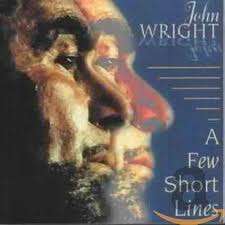
Flashback: John Wright and Maurice Dickson at the Postcrypt Coffeehouse - 30 March 2001

It's been 10 years since anyone has posted around here, so maybe that makes it even more appropriate to post about a concert that took place almost a quarter century ago.

I've been cleaning up things at my house this week, and I came across a poster that I had no memory of having: a generic promotional poster for John Wright and Maurice Dickson with "Tonight! Postcrypt Coffeehouse! Music from 9pm!" written in my hand at the bottom.

I had no memory of the poster, but I certainly remember the concert.  It's one that my friend Ben and I have talked about often over the years -- both for the music and because we learned the phrase "one for the stairs" that night.

When I managed the Postcrypt (Fall 1998 through Spring 2001), there was a group of artists who performed regularly and who were likely to get booked for any given Friday or Saturday night, and then there were artists who would send in their materials for consideration.  I don't remember exactly who got in touch with me about John Wright and Maurice Dickson.  I think it was likely a booking agent putting together a U.S. tour for them.  It's probably likely that I consulted with my father about booking them.  I know that he was excited about their appearance, but it was on a Friday night, which would have meant that he was hosting his radio show and so unable to attend.

In those days, the typical Postrcrypt night had three acts, who would go on stage at 9, 10, and 11 o'clock.  I usually agreed to pay artists $35, $45, or $65, depending on how far they were traveling to come to play in New York and the size of the crowd that I thought they were likely to draw.  Sometimes there were exceptions.  Looking at my notepad from the AY00-01 season, I see that Josh Ritter got paid an extra $5 for $40 in total, while we paid Pamela Means $70 for her fall appearance and $75 for her spring appearance.  Looking back at the AY99-00 season, Mary Gauthier only got the basic $35.  All of those folks can demand quite a bit more these days...  And I have to blush a little to think that those were the fees that I was handing over to them at the end of the night.  If the audience was particularly generous when we passed the hat around, we would, of course, pass along that money to the artists.  I don't have a fee listed for John Wright and Maurice Dickson.  I shudder to think that perhaps they came from the U.K. to play for $35.  There are dozens of dollars to be made in folk music, they say.

I do know that I had agreed to put them up -- in my suite in the East Campus dormitory.  And I remember there was some discussion about them having separate bedrooms -- it was the first time I heard about sleep apnea.  I don't remember quite how that all worked out.  I think that John slept in my room, Maurice in the room of one of my suitemates, and me in the common room, but I'm not sure.

My notes also indicate that we ate dinner together -- or rather tried to eat dinner together -- at the now-gone Cafe Pertutti.  I don't remember this.  My notes say that I had to go set up for the show and that I took the chicken parmigiana to go and "scarfed it while making brownies."  Postcrypt preparation in those days involved baking a pan of brownies in the stove and popping a bowl of popcorn in a pot on the stovetop in the kitchen in the basement of St. Paul's Chapel.  

When I got to the chapel, I discovered that it was going to be one of those nights where there was competition upstairs in the main chapel space.  Quoting my younger self, "CCC [Campus Crusade for Christ] is upstairs holding a rally for Jesus. Full electric band."

That meant that it probably wasn't going to be the greatest performance environment for the first act of the night, which was the terrific New York singer-songwriter David Masengill.  My notes indicate that, after he played two songs, he expressed some complaints about the "Hitler Youth rally upstairs."  Such competing sound sources were a feature of one or two nights every semester.  Sometimes we would be the aggressor when the upstairs act was, say, a performance of Mozart's Requiem, and there we were downstairs belting out sea shanties.  

David had opened his set with "My Name Joe," his song about an undocumented worker in a New York City restaurant.  He had worked in the story he tells about Louis Armstrong tricking Richard Nixon into carrying a bag with his stash of marijuana in it.  And then he closed the set with his classic "Rider on an Orphan Train."  He got called back for an encore and sang "My Home Must Be a Special Place."

The late Sandy Ross was the 10 o'clock act.  Sandy used to travel around in a camper -- before it was cool! -- and I suspect that she was parked somewhere out on the streets of New York that night.  I don't remember.  I also have relatively few notes from her set.  I have written down that she sang "All My Heroes Played the Blues," "How Was It Justified" (a song about the Oklahoma City bombing), and "St. James Infirmary" before closing with her song "Half Empty/Half Full," which I had surely heard before but nonetheless found myself inspired to record the chorus:

We take the glass and fill it up

And drink the glass half down.

The wine takes on a sweeter taste

The more we pass around. 

We live our lives in compromise

Like tourists passing through,

And we never ask the question 

If the glass is half-empty or half-full. 

Since we live in an era where we can just call up songs, listening to this one again, I find that I either recorded the fourth and penultimate lines wrong or else she was singing the song differently than the recorded version.  More likely the former.  On the recording Portraits of Innocence, she sings, "And the wine takes on a sweeter taste / Each time we pour a round." and "Lest we stop and wonder / If the glass is half-empty or half-full."  It's a great song and worth taking a listen to.

Sandy was also called back for an encore.

My friend Ben arrived just before 11-- after the first two acts had finished.

John Wright was living as a shepherd in Northumberland at this time.  He had grown up in suburban Manchester and had served in the Household Cavalry.  He had played in rock bands in his youth and sung in piano bars in London's West End in the 1970s.  In 1990, he had self-produced a cassette tape of unaccompanied traditional English songs, and with that, had launched an unexpected career in music.

Maurice Dickson is from County Antrim in Northern Ireland.  

On the Postcrypt voicemail, where I announced each week's shows, I had described them as "two singers from England" or "two singers from Britain."  Maurice had called the Postcrypt phone number to leave a voice mail letting me know that they had arrived in New York.  He began his message, "This is Maurice Dickson from Northern Ireland," and found at least one or two other ways to let me know that I needed to be a bit more careful with my classification of national origin.

So why was this such a memorable show?  Because they made brilliant music.  John Wright's tenor voice was gorgeous, so resonant in the amplification-free Postcrypt space, bouncing off those Guastavino tiles.  The two of them weaved in and out with each other musically in a flow that was either gentle or energetic depending on the song.

The set began with the traditional ballad "Lord Franklin" and then "What's the Use of Wings?" a song written by Brian Bedford of the group Artisan.  Maurice sang "When the Soft Wind Blows" and then played the instrumental "The Jesters Dance." He then sang "More Than She" and "Where Eagles Fly."  They sang "Dumbarton's Drums" and closed with "The Kerry Recruit," which had first turned John on to traditional folk music when he was in the army.

They were also called back for an encore, and they extended the night with three more songs: "Black is the Color," one of the Appalachian ballads collected by Cecil Sharp that then made its way back across the Atlantic; a blues song; and "Danny Boy" to close.  

Whereas Postcrypt sets were typically 45 minutes, John and Maurice had played for almost 90.  I don't remember how many people were left at the end, but I'm sure we were all captivated.

And then we decided to go out for some drinks!  It was me and Ben, two college students in our early 20s; John and Maurice, two middle-aged U.K. folksingers; and as I have written in my notes "two other blokes," who I recall as also significantly older than me and Ben.  

Ben and I both have a vague memory of going to the Lion's Head Tavern at the corner of 109th and Amsterdam, but my notes don't indicate that.  We might have gone in and then gone right back out again.  We definitely ended up at SoHa, located on the opposite side of Amsterdam, south of 108th street, which the New York Times described in 1999 as having "Goth-inspired decor, including chandeliers, floppy couches on split levels and a red pool table perpetually surrounded by men in goatees."  I remember it as more glam than goth, but it certainly seemed like a strange place to be bringing our entourage of companions twice our age.

After a drink at SoHa, the "two blokes" peeled off, and Ben, John, Maurice, and I headed over to the legendary (but also long-gone) West End.  My notes are hard to read, but I think they report that we were there for last call.  What Ben and I certainly both remember, for we have repeated it to each other often, is that when the question came as to whether we were going to have one more round or not, either John or Maurice looked at us and said, "One for the stairs, boys -- one for the stairs," and we had another round.

Ben headed back to his place, and I took the visitors back to my dorm.  The next morning, I got up before they did to embark on my Sunday morning routine of going to church, having breakfast at Tom's Diner, and then hosting The Moonshine Show on WKCR.  I found a parking ticket on the windshield of their rental car, left where it shouldn't have been left on Amsterdam Avenue; I picked it up and paid for it with Postrcypt funds.  I don't remember seeing them again that day.  I think that they must have gotten on the road while I was on the air.  

Indeed, I never saw John Wright again.  He died in 2008 at the age of 60, earning an obituary in The Guardian.  Whenever I take a listen to one of his albums, I am always struck by the great control that he had over his voice and the warmth and emotion in that voice.

I haven't seen Maurice Dickson again either, but he is still out there making music, and I regret that Ben and I -- who met up in Belfast this past March -- didn't make an effort to get out to Antrim and check on his memories of that night in New York two decades ago.

Rest assured, though, when we were there on the soil of Northern Ireland, we did say, "One for the stairs, boys..."

Wednesday, April 17, 2013

The Flatlanders @ Carnegie Hall, New York City, April 13th, 2013


Saturday night, I made the trek up the NJ Turnpike to the big city to see The Flatlanders play at Carnegie's Zankel Hall. This was my first time setting foot in Carnegie Hall; not once in my 8 years living in New York City did I make my way there. The pretentiousness was not as stultifying as I feared it might be, although I imagine the Stern Auditorium is a different story. The nature of the act also offset any snootiness: Texans are not known for that, and there were plenty of Texans in the audience on Saturday night.

This was my first time seeing any of The Flatlanders' principals--Jimmie Dale Gilmore, Joe Ely, and Butch Hancock--play live, to say nothing of the trio. I can't remember how I first learned about their music. I remember hearing JDG sing "Jesus Christ" for one of the Woody Guthrie celebrations about a decade ago and being impressed, and I recall WFUV playing "Julia" from the Now Again album quite a bit when it came out in 2002. On a whim, I bought a used copy of Joe Ely's Live at Liberty Lunch (1990) at a record store in Montague, MA, back when I lived in Pioneer Valley, and I spent a lot of car rides listening to it. But not as many as I spent listening to JDG's album Spinning Around the Sun (1993), which was my music of choice last year, as I drove from Portland to Brunswick 3 or 4 days per week. I've grown to love that album without limits; it's perfect, song for song, arrangement for arrangement. I also heard the Flatlanders' album Wheels of Fortune (2004) while living in the Valley, and I fell in love with it immediately. I love Now Again (2002) almost as much.

On Saturday night, the Flatlanders performed a mixture of new and old material, but the phrase "new and old material" has little meaning when it comes to these guys. Their first official album release from 1990, More a Legend than a Band, comprised songs originally recorded in 1972, and their most recent album, The Odessa Tapes (2012), was also recorded in 1972. Many of the songs on both of those albums have been recorded by one or more of the principals since 1972, sometimes several times over. I recognized as many as half the songs, but not a single song was anything less than satisfying. The opener was "I Had My Hopes Up High," which, I later learned, Joe Ely recorded for his first solo album back in 1977. I had never heard it before, and I loved it so much, I was sorry for it to end. For the first half dozen songs, pretty much everything was uptempo, from the sly, silly Butch-led "Baby Do You Love Me Still?" to the JDG-led "Wavin' My Heart Goodbye" to Joe's "Not That Much Has Changed" and Butch-led "Julia" and Joe-led "Homeland Refugee." After that, the backing band left, allowing the principals to sit on stools and strum and pick on their acoustic guitars, before the band returned for another half dozen or more songs.

The acoustic segment of the program was extraordinary in its beauty, restraint, and conversational looseness. Transcendence was achieved immediately, by way of Butch Hancock's "Danglin' Diamond." This performance I can only describe as indescribably beautiful. The song was barely even there; only the feeling of time having passed and opportunities taken up and forgone. Joe sang lead on Jimmie's "Tonight I Think I'm Gonna Go Downtown," one of the most beautiful songs ever written, complex in its simplicity (whereas Butch insists on simple complexity). Butch sang his own "If You Were a Bluebird," which I'm used to hearing Joe sing. Overall, they performed six songs in the acoustic set--two rounds of round-robin--interspersed with some chat about the old days. Joe was particularly poignant, talking about his rambling around Texas and the rest of the continent after the group's demise in 1973. He first made it to NYC in the winter, sometime in the mid-1970s, panhandling in front of Carnegie Hall, making that the first time he played at Carnegie Hall, although this was the first time he'd ever played "in Carnegie Hall." After the sextet of songs, the band returned to the stage, and the trio began a slow, acoustic version of "Dallas," before the band kicked the song into gear after the first verse.

One of the unexpected pleasures was the guitar playing. Not only did the band have a hot electric guitar player--Robbie Gjersoe, who tore off solo after solo with obvious joy--but Joe Ely had his time in the spotlight too. Of the three principals, he is the one who has spent the most time in a rock n' roll spotlight, and it showed. He had some tasty leads during the acoustic portion of the show in particular.

But it was the songs that ruled the day on Saturday night, along with the overall feel of command and authority that is so difficult to define or anticipate but which is immediately identifiable when you hear it. Joe preceded "Homeland Refugee" with the story of the song's inspiration: a child of Texas natives who'd fled to California, looking for work after the dustbowl years of the 1930s, returns to Texas, a state that the child had never known. As it happens, I recently had a conversation with a colleague about the children of Albanians living in Greece who, in the wake of the current financial crisis, have "returned" to Albania, a country they've never known. I was also delighted with "Pay the Alligator," one of the silliest songs in the Flatlanders' cannon and, to finish off the set, the standard "Sitting on Top of the World." That last one was performed uptempo with some hot electric guitar solos, which is the most common way of performing that song these days. Chris Smither has claimed that song as his own, having extracted the pain and suffering from the lyrics and laying them bare. But it sounded just fine as a rocker on Saturday night. During "Thank God for the Road," the gentleman seated to my right exchanged satisfied glances with me, as Butch sang of "shoulders to cry on." By the time the band encored with "Midnight Train," I already knew that this was the best night of live music I've enjoyed in over a year.

Sunday, February 24, 2013

Kalamazoo Gals

Longtime stalwart of the NYC bluegrass scene Jack Hirschorn calls the following to our attention:
"Kalamazoo Gals” by John Thomas is the forgotten story of the women who built Gibson’s “Banner” guitars during WWII.

Please join us for an informal gathering and book signing in a unique setting: Retrofret Vintage Guitars. Located in the industrial Gowanus Canal section of Brooklyn, NY, Retrofret will honor Women’s History Month and the release of Mr. Thomas’ book on Sat. March 2, 2013 from 5PM to 8PM.

"Retrofret is uniquely connected to the subject of Mr. Thomas’ new book, ”Kalamazoo Gals”, for many reasons: First of all we have quite a thing for old Gibson guitars! Retrofret is one of the few major guitar shops dealing exclusively in vintage instruments. Secondly, our repair shop happens to be run by a woman and our staff includes three female technicians handling most of the repair and restoration work. Finally, I just love the true stories behind the guitars - especially the little known ones." - Steve Uhrik

Friday, February 15, 2013

Chris Smither @ World Cafe Live, Philadelphia PA, February 8th, 2013


As I type this, I am listening to the album Don't It Drag On, Chris Smither's 2nd album, originally released in 1972. Until now, I've never listened to it from beginning to end. One reason for that is the unavailability of the album; I found a copy from a used CD store via amazon.com. But another reason is that Smither rerecorded almost every song on the album, mostly for the 1990 live album Another Way to Find You. Two of the them show up on his most recent album, Hundred Dollar Valentine, as new studio recordings. But on Don't It Drag On, all of them sound like the work of a young old man, like Neil Young had decided that blues and bluegrass were the way to go after all. His voice hadn't quite filled out yet--or at least it doesn't sound like it on this recording--and the foot-tapping had not yet become an important part of his sound. So it doesn't sound like the man who recorded Another Way to Find You, or anything after. But the arrangements--eerily austere on "Another Way to Find You," gently propulsive on "Don't It Drag On," mournfully elegiac on "Every Mother's Son," tightly bluegrassy on "Friend of the Devil"--are winners, every one. And the songwriting and the guitar picking are the brilliant flashes that he's been coming up with ever since he began recording again with It Ain't Easy (1984). And in the end, although I love the way his voice has changed as he's aged, even the somewhat thin vocal sound on this album (and on its predecessor, 1970's I'm a Stranger Too!) feels right somehow.

At the World Cafe this past weekend, the 68 year old was in fine voice. The thick, slightly slurred baritone felt warm and comfortable, like it always does. The pleasures of his performances don't quit over the course of 90 minutes, and they'd probably still feel fresh after 120. "Open Up" has become the standard way for him to greet audiences for many years now, and "Lola" is a common follow-up, and everything seemed to unfold effortlessly from there. His sets still emphasize newer material, from Drive You Home Again (1999) up through Hundred Dollar Valentine (2012). For the fans, there are few surprises. Once, he dipped back to the Up on the Lowdown (1995) album for "Can't Shake These Blues." When he was ready to conclude with what has become his standard farewell, "Leave the Light On," requests for "No Love Today" echoed through the room, and he obliged, playing both of them to close the set. He returned to play J. J. Cale's "Magnolia," a simple love song that, he explained, signified that he was getting himself ready to write the material for his next album.

The high points were plentiful. The newer "Place in Line" elicited murmurs and sighs of appreciation. His waltz-time version of "Visions of Johanna" had the feel of complete command. "Leave the Light On" is always a climactic moment, and it was on Friday night. "Seems So Real" once again felt tougher and more strident in concert than on record. And the concluding "Magnolia" radiated love. Hearing Chris Smither perform in concert is an essential experience for anyone with an interest in this kind of music, and as he ages, each performance feels increasingly special. "Since space and time are bending / there's no finish line," but eventually there will only be a body of recorded work left behind, and the memories of these performances. I've seen around 20 of them, but they aren't enough. I am not looking forward to a time when they'll have to be.

Sunday, January 27, 2013

Erin McKeown @ Johnny Brenda's, Philadelphia PA, January 20th, 2013


An impromptu decision to ignore my raging head cold and wander out into the chilly Philly streets to see Erin McKeown wound up paying off. This was my first trip to Johnny Brenda’s, a venue I’d been hearing good things about since I hit town back in June, and it’s right on my street, albeit over a mile away. The performance space is upstairs from the bar and small. The stage is big relative to the rest of the area, and there’s a balcony that I could not see much of from my station on the floor, where I leaned against a pillar for the entire evening and stifled my coughing and sneezing. Johnny Brenda’s gets good acts. I had to miss David Wax Museum when they came through town, but this was where they played.

Erin’s opening act was a Canadian singer and guitarist named Jenn Grant. She performed with a drummer, a bassist, and a guy who alternated between steel, keyboards, and guitar (a beautiful cherry-red Epiphone that I wanted to get my hands on). Her band was good. They were clearly supporting her songs, staying out of the way and letting her put the words across. Her voice was a bit too quiet in the mix, though; I couldn’t often make out the lyrics. At the end of her set, the rhythm section departed, leaving her and her keys-man alone on stage for the finale; “a rock song,” as she put. This wound up being “Eye of the Tiger,” which I recognized immediately. At first, I couldn’t tell if she was trying to play it straight. She gave herself away, though, when she hit the refrain and pawed the air at us as she sang the word “tiger.” We all laughed.

Erin McKeown is someone who knows how to simultaneously play it straight and put you on. She’s been making music professionally for around 15 years now, and her album, Manifestra (2013), which I have yet to hear, is full of political songs. I was excited to learn this. Her best albums display not just emotional complexity and a real facility for arranging music, but an ironic wit that, in theory, should serve politically themed songs really well (at least, it seems to work for Randy Newman). Her albums are basically divided into two groups: the ones about herself (Hundreds of Lions, We Will Become Like Birds, Distillation), and the ones about something else (anti-Christmas, American popular song, Judy Garland). The new one appears to be one of the latter ones, and that leaves this particular admirer with a quandary. In principle, I like hearing singer-songwriters get outside themselves a bit. But in practice, the more into herself her gets, the better Erin’s music becomes; Hundreds, Birds, and Distillation are her best. Her Sunday night show leaned heavily on the new album, and the only other songs she performed came from the three great ones. In any event, what makes her best music so great is her ability to straddle the line between sincere emotion and ironic distance. Most performers choose one or the other, and the few who try to split the difference don’t usually succeed the way Erin McKeown does.

Sunday night, she was accompanied by a horn player and a drummer. The drummer in particular was really good. I thought back to Allison Miller, who was playing with her when I saw her at Southpaw, many years ago, and the drummers who played with her during her Distillation 10th anniversary show at the Iron Horse a couple of years ago. Erin likes a good drummer. And this one made his presence felt from the very first song, "Aspera."

After “Aspera,” Erin took us through a bunch of the new songs and told stories about them as she went. A particularly jaunty one, “The Jailer,” was a highlight. She also revealed an unanticipated enthusiasm for the NFL. When an audience member informed her that the Ravens won, she announced it to the crowd, to a smattering of cheers and boos. She remarked that she would never again talk to a Philly crowd about sports. But later on, she did. “I hate the Patriots,” she confided to us, a pretty safe thing to say in Philadelphia. And, at one point, her band left the stage, leaving her to take a couple of crowd requests. “That is the best feeling in the world,” she said, after the calls for different songs filled the air. “Beautiful (I Guess)” was beautiful, performed solo. And she dedicated “The Little Cowboy” to her opening act, after a few false starts that required some guitar retuning.

What else? A handful of songs from Hundreds of Lions—which I rank #2 in the Erin McKeown discography, after the extraordinary Distillation and in front of the superb We Will Become Like Birds—which all sounded great. A little bit of singing along with “We Are More,” from Birds. Some commentary about the US-Mexico border and, in response to an audience question, some insight into what inspires her. Two performances of the new song “Proof,” first done straight and second done backwards. A great instrumental jam, during which Erin sat down next to the drummer and grinned at him as her guitar wove in and out of the percussion.

Friday, December 21, 2012

Hot Tuna @ The Beacon Theater, New York City, December 1st, 2012


Over the past decade or so, Hot Tuna has passed into the realm of comfort food. I do not listen to the recordings as often as I used to, but Tuna at the Beacon may become an annual tradition for me. This was my 5th (or 6th?) time at the Beacon for Hot Tuna since the fall of 1999, and I have yet to be disappointed. This year’s show was important for a few reasons. First, it was my first Tuna show since the release of Steady as She Goes (2011), the band’s first studio album since Pair-a-Dice Found (1990). While I’ve heard Jorma perform some of the songs from this album in solo performances, I had yet to hear most of them performed with the full band. Furthermore, this show included a number of special guests, some of whom I’d heard play with Tuna before, others not. My last Tuna show was the 70th anniversary bash at the Beacon, detailed here, and, much as I love the Jorma solo shows I’ve seen in the meantime, it’s his band that means the most to me.

The show began about 10 minutes past 8:00, when Jack Casady walked out on stage alone. After thanking us for coming and saying a few respectful words about New York, especially in light of Hurricane Sandy’s devastation, he began playing some bass guitar alone on stage. Two minutes into the solo, Jorma Kaukonen, Barry Mitterhoff, and Larry Campbell walked onstage and began picking out the familiar opening to “Hesitation Blues,” which elicited enormous cheers from us all, and off we went.

This edition of Hot Tuna included the core band—Jorma, Jack, Barry, and Skoota (my favorite of the many drummers that have passed through the band)—and this evening featured many special guests: G.E. Smith, Larry Campbell, Teresa Williams, Lincoln Schleiffer, Bob Margolin, Bill Kirchen, and the wonderfully named Cindy Cashdollar. The material from Steady as She Goes prominently featured Larry and Teresa, particular the latter’s harmony vocals. Larry Campbell played some killer violin, starting with the opening number, and he sat down to do some pedal steel on a couple of tunes. His guitar playing, meanwhile, is superb, and if you have not heard the recording of Tuna’s Beacon shows from 2010, which include his tasteful licks on “Genesis,” among other Tuna classics, you are missing out. But he and Teresa shone most brightly when, in the middle of the first set, they did an extended jam on the Grateful Dead’s “Sugaree,” a great surprise. Bob Margolin was a guitarist in Muddy Waters’ touring band back in the 1970s, and he contributed some fine solos, particularly on “Rock Me Baby,” and a couple of his own songs, most prominently “She and the Devil,” in which Bob gets down on his knees to pray: “Lord, give me strength / don’t let me kill this woman,” later followed by an assurance: “someday she'll surely go to hell.” Bill led the band on Dylan’s “The Times They Are A’ Changing,” another nice surprise, and Cindy played some mean lap steel on that one and on a couple of others. But the greatest contributions, I thought, came from “George,” as Jorma called him (and that *is* G.E.’s name, after all). His loud, distorted chords on “I See The Light” and “Hit Single #1” made those two the real highlights of the first set, and his solos on “Rock Me Baby” and “Bowlegged Woman” stole the show. And in the second set, he brought Richard Shindell’s “Arrowhead” to life. I hope he gets to play with these guys more often.

Since I’m a Hot Tuna fanboy, it’s hard to write about the band without simply raving. These guys are instrumentalists without peer, and it’s such a treat to hear Jorma, in particular, play electric guitar. His sound is very much his own, and it hasn’t changed too much in the past 45 years (at least not to my ears). The guitar solos (and let us never forget, Jack Casady’s bass solos) were consistently exciting, but it was the ensemble playing that I liked most. “I See the Light” is a thing of beauty, and G. E.’s contributions rocked the song like I haven’t heard before, and his contributions were every bit as great to “Hit Single #1,” which is also Barry Mitterhoff’s moment to shine. Other than those two, and the electrified version of “Keep Your Lamps Trimmed and Burning” toward the end of the second set, my favorite moment was when Larry played pedal steel and Teresa sang harmonies on “Bar Room Crystal Ball.” If my memory serves me correctly, the last time I heard them play this song was my first Tuna show back in the fall of 1999 (at the Beacon), and it’s one of my favorite, most lyrical moments from the Yellow Fever (1975) album. I see here the set list from that show; time flies!

Hot Tuna doesn’t tour the electric band as often as they used to, so get it while you can is my advice.

Monday, December 3, 2012

Rodriguez @ World Cafe Live, Philadelphia PA, October 28th, 2012


After a hectic travel day from Portland, ME to Philadelphia PA that featured a delayed flight and plenty of worry about whether hurricane Sandy would strand me up north, I made it down to World Café Life with Amanda to see Rodriguez. I had imagined that we were like most of the folks at the venue in that we first became aware of the great man through the recent movie, Searching for Sugarman. In fact, given how knowledgeable many audience members seemed to be about his music, I sense that Amanda and I were behind the times. Given that Sixto Rodriguez has been touring on and off since 1998, when he made his first visit to South Africa, this is really not too surprising.

Rodriguez’s performance was relaxed and quietly confident. He opened the show with “(You Give Me) Fever,” performed with some nifty strumming on his nylon-string guitar. Much of the rest of his set consisted of switching between his own songs and covers of traditional rock songs (“Blue Suede Shows”) and ballads (“It’s Just One of Those Things” and “I’ve Only Got Eyes for You”). He performed these covers with a lot of enthusiasm and remarked that these songs meant a lot to him. His own songs—“Crucify Your Mind,” “Establishment Blues,” “Sugarman,” “I Wonder,” “Inner City Blues,” and others that I could not identify but the audience seemed to know—felt different, as stripped away from the elaborate arrangements on Cold Fact (1970) and Coming from Reality (1971). The ethereal imagery and turns-of-phrase of his own songs contrasted strikingly with the more plain-spoken oldies that he enjoyed so much.

The overall feel that Rodriguez exuded in his performance was of a man who was simply happy to be there. Pretensions were limited, and so was stagecraft. He stood and smiled at us. He retuned the guitar after almost every song, turning down the volume to pick and strum the next song just for himself, making sure he knew what he was doing before turning the volume back up to play for the rest of us. He told corny jokes and stories—about Mickey and Minnie Mouse going to marriage counseling, about how to keep successful relationships together, about the unfortunate city of Detroit, about his own luck at getting to play music for a living at his late age—that his audience, me included, ate up and applauded. He mentioned his performance on David Letterman, pointing out that the full arrangement of “Crucify Your Mind” would have sounded even better if he had not been playing at all. The self-deprecation might have sounded self-serving from another performer, but knowing what we all know about the decades he spent away from professional music, it was a poignant reminder of how challenging his life has been. I sense that that is what a lot of his current audience actually hears. Rodriguez is a survivor, a soulful, big-hearted professional who for too long was denied the vessel best suited for his self-expression and managed against the odds to resume his calling. His songs are good, but they pale in comparison to the example set by his life.

Friday, October 19, 2012

Fourth Annual Champaign-Urbana, Illinois, Folk and Roots Festival November 2-3

Urbana, Ill. (October 4, 2012) – Now in its fourth year, the Champaign-Urbana Folk and Roots Festival (CUFRF) is coming to Downtown Urbana on November 2-3.

“Each year, the festival has gotten bigger and bigger,” explained Brenda Koenig, chair of the CUFRF steering committee. “The fall festival is a culmination of a year’s worth of planning by our committee and a number of concerts that have brought national and regional performers to the community. The annual festival is entertaining, hands-on, and accessible, which is what folk and roots music is all about.”

This year’s festival will host over 80 performers, artists, and storytellers celebrating American roots music, dance, and stories. This year's festival activities will also include jam sessions, dances, workshops, sing-a-longs, storytelling, and family activities.

“Champaign-Urbana is already a rich musical environment,” said Ed Hawkes, one of the organizers. “The Folk and Roots Festival brings in well-known national and international performers and it celebrates our local music scene as well.” A plethora of performers includes a turn-of-the 20th Century mandolin orchestra, folk, blues, and bluegrass, Klezmer music, and Irish fiddle music can be enjoyed within a few blocks of each other.

The Charleston, Illinois band, Resonation Station, will kick off the festival on Thursday, November 1, at Krannert Center’s UnCorked, from 5:00-7:00 p.m. The event is free and open to the public. Singer-songwriter Robby Fulks heads the list of featured acts at this year’s festival that includes the Freighthoppers, Storyteller Mike Anderson, Canada’s Tequila Mockingbird Orchestra, Devil in the Woodpile, John Lilly, Blind Boy Paxton and Brandon Bailey, Mugdock Pipers, Red Tail Ring, Irish fiddler Rose Duffy, harmonica master Deak Harp, The Curses (jug, swing, blues), and The Blue Ribbon Revival.

A number of area artists performing at various venues include members of the Champaign-Urbana Singer/Songwriter’s Collective, Black Coffee Fridays, David Howie, Kevin Elliot, Almost “A” Quartet, accordianist Jay Landers; plus, a Nightjar Productions showcase with Gloria Roubal, Justin Rondin, Midas the Crow and Vivian McConnell, the Mugdock Pipers, The Shanties (Celtic), The Stay Gold Boys (rockabilly), The Young & Fretless, Emily Otnes, and Margaret O'Brien.

On Friday and Saturday, there will be a variety of jam sessions throughout the day. Bring your uke and jam with the Homebrew Ukulele Union. Free public workshops, sings, storytelling, and art sessions are also scheduled throughout the festival including instrument "how-tos", children’s activities, sing-a-longs, and community jams in a variety of styles. Scheduled dances include contra, Cajun, square, and folk styles.

A festival wristband costs $25 (children 12 and under are free) for access to all performance venues and activities. Tickets for single events, including dances, can be purchased at the door of the individual venues. Wristbands are available at Heartland Gallery and the CUFRF booth at the Urbana Farmers’ Market on Saturdays through October.

Visit www.folkandroots.org for a complete schedule of events and performances, to purchase a wristband, to become a sponsor, or volunteer during the festival. The C-U Folk and Roots Festival is a not-for-profit, all-volunteer organization dedicated to the promotion of accessible art forms and community building in East Central Illinois. In addition to many area sponsors, the festival funded in part by a grant from the Illinois Arts Council and the City of Urbana Public Arts Commission.

Sunday, September 30, 2012

John Fullbright on Prairie Home Companion


This great singer-songwriter, who is currently on tour with Devil Makes Three, performed on Prairie Home Companion over the weekend. Have a listen.

Sunday, September 16, 2012

Jorma Kaukonen w/ Loudon Wainwright III @ The Colonial Theater, Phoenixville PA, September 14th, 2012

Not long after entering the Colonial Theater in Phoenixville, I entered the men’s room, just in time to hear a couple of guys, at least two decades my senior, talking about their excitement about seeing Jorma Kaukonen. I was a bit irritated, however, to hear one of them announce, apropos of his excitement, how great Bless Its Pointed Little Head (1969) is, and the other swear that that album, Jefferson Airplane’s first and best live album, goes together with their third album, After Bathing at Baxter’s (1967). I was irritated not because I disagree about the greatness of either (although listening back to Baxter’s now, it’s a bit uneven, though its great moments are some of the Airplane’s greatest), but because you’d think Jorma hadn’t done anything since the ‘60s were over. But he had just gotten started. In any case, Jorma Kaukonen and Hot Tuna shows seem to attract folks who, if their offhand comments and in-concert whooping are any indication, checked out after the Airplane landed, or perhaps after Hot Tuna cooled off at the end of the 1970s, and were out to recapture something. This is not the first time I’ve noticed this—and as someone who was born in the later 1970s himself, I’m at a generational disadvantage in assessing an audience that in some broad sense I’m not a part of—but it’s the first time I found myself a little annoyed. Jorma Kaukonen plays a lot of traditional material—folk songs, let’s say—but he’s not a nostalgia act. Over the past decade or so, he’s been recording some excellent albums, including the first new Hot Tuna studio album in over 20 years, and he doesn’t shy away from performing those songs in concert.

The opening act for the evening was Loudon Wainwright III, who takes generational solidarity more seriously than most touring singers his age simply by writing the personal songs that he’s always written and not pretending that he is anything other than he is. At the moment, what that means is that he knows that most of his life is over, and death is very much on his mind. Several of the songs from his set came from his most recent album, Older than My Old Man Now (2012), which contains entirely songs about “death and decay,” as he told us. He preceded two of the songs he played from that album—the title track, along with “Something’s Out to Get Me”—with recitations of Life Magazine columns that his father had written, one about his own father (Loudon Wainwright I, that is) and another about his own impending demise. The generational disjuncture made itself felt about halfway through the set, when he made a show out of peering into the audience and claiming to notice that he could see his demographic out in the crowd. That comment led into “My Meds” from the new album, a recitation of all the substances he was on (or would be on by the end of the night, he assured us). “Heaven” and “The Picture” both featured death in their own way, one moving me to laugh out loud, the other making me tear up. “Over the Hill” he co-wrote with his late wife Kate McGarrigle, before either had turned 30. When they weren’t playing music together or raising their son, he said, “we were trying to kill each other.” “The Morgue” was the highlight of the night, as it combined “death and decay” with his favorite theme from earlier in his career, “shitty love.” And there was also time for “Ode to Pittsburg,” which he wrote in 1969 and was trying to prepare for his show in that city the next night, where he went to college. He forgot about half the words, prompting him to announce, as he struck the final chord, that he was going to have to go home and google the song so that he could memorize the words in time for the show.

While Loudon Wainwright’s performances tend to be emotional roller coasters, Jorma Kaukonen’s performances (at least his solo acoustic ones; Hot Tuna is another matter) are, by contrast, steadier enterprises. This is a function of the kinds of material they perform, their performing styles, and their own particular quirks and talents. Jorma is a blues singer, plain and (not so) simple. His set with Barry Mitterhoff, as usual, combined a handful of original songs with traditional blues songs, some of which have been in Jorma’s repertoire since the 1960s, like “Good Shepherd” and “Come Back Baby” which, probably not by coincidence, are also the two songs that featured the longest jams of the night. “Hesitation Blues” and “How Long Blues” were recorded for the first Hot Tuna album and elicited some of the loudest applause of the evening. As usual there were plenty of Reverend Gary Davis songs, this time including “Children of Zion” and “Let Us Get Together Right down Here.”

Jorma was a gracious host. While Barry did most of the talking, introducing songs and doing the usual thank yous, Jorma’s stage presence was wry and warm. He pointed out that the ukulele that Barry Mitterhoff took up for “The Terrible Operation” dated back to the 1920s. He shrugged off a particularly loud request for “Killing Time in the Crystal City” by saying “now there’s a cheerful song.” He dedicated “What Are They Doing in Heaven Today?” to his old friend and bandmate Jack Casady, whose wife passed away not long ago. He referred to Miller Highlife as “the champagne of bottled beer.” And, as usual, he let Barry advertise their merchandise: CDs, t-shirts, and an assortment of teas which, as Jorma said, was for our benefit, not theirs. He bade us all stay healthy and take good care of ourselves so that we could all make it to NYC for the Beacon Theater shows after Thanksgiving. The musical high points were when Jorma got flashy. His solo on “Barbeque King” was especially fine, and the uptempo segment of “Hesitation Blues” is always marvelous to behold. And the encore of “Embryonic Journey” was a great moment. It was the Jefferson Airplane song that the crowd had been waiting for. And I’m glad they, I mean we, got it

Monday, July 30, 2012

Marshall Crenshaw with The Bottle Rockets @ World Cafe Live, Philadelphia PA, July 25th, 2012


For my first evening of live music in Philadelphia (not counting a rather lonely evening at Ortlieb’s, watching a jazz guitarist solo over some r&b backing tracks for half an hour), I stuck with the tried and true—Marshall Crenshaw—and something new –The Bottle Rockets. I hadn’t heard of this band other than in the context of Marshall Crenshaw, who has been playing with them on and off for the past couple of years. It turns out they’ve been putting out albums for the last 20 years, pretty good ones according to Robert Christgau, although I did absolutely no research on them prior to the show. They played for about an hour, before returning later as Marshall Crenshaw’s backing band.

I associate the term “World Café” with the radio show, hosted by David Dye, which I’ve been listening to ever since I discovered WFUV about a week after moving to New York City in the summer of 1999. The venue of the same name is a place reminiscent of the now long-defunct Bottom Line in NYC, with a couple of rows of tables, one elevated a little , close to the bar, and a second cluster closer to the stage (which is where I was, very close to the sound engineer). Unlike the Bottom Line, there was also a big standing room area close to the stage. I was afraid at first that the standers would be in the way, but the stage was high enough for that not to be a problem. There were over 100 people, maybe as many as 150, at the show, and that was not quite enough to convey the impression of anything close to a sold-out show. I think all the sitting room was filled up, but there just weren’t enough folks up and dancing close to the stage and, toward the end of the show, it felt like the crowd was getting restless. I overheard at least one woman say that it was past her bedtime. This was clearly an audience full of Marshall Crenshaw fans, most of them well over the age of 40. The only clear Bottle Rockets fans were about a dozen or so younger folks—some college aged, a few around my age—who were clustered close to the stage, at least a few of whom seemed to vanish after the Bottle Rockets finished their opening set.

So, I didn’t know what to expect from the BRs. What I got was an hour’s worth of loud, raucous rock n’ roll. The crunching guitars were loud enough to drown out a lot of the singing (except when the bass player harmonized; I wish he’d done more of that), but it didn’t matter, because the band was great. Pretty much every song deployed a short, catchy riff, and every one had at least one guitar solo to absorb. Best of all was the drummer, who looked totally relaxed and was clearly having a great time. He held things together. They were tight and focused and clearly have been doing this for a long time. Some songs veered toward rockabilly, a few were slow. But most were uptempo and hard-rocking, and nothing bored me. They were a bit reminiscent of Joe Ely at his loudest. If you’ve heard Joe’s album Live at Liberty Lunch (1990), picture an hour’s worth of stuff like Joe’s “Are You Listening Lucky?” from that album. Song fragments I picked up included an opener called, I think, “Shame on Me,” “Indianapolis,” “Mountain to Climb,” “I Fell Down,” and a really great one called “Welfare Music.” Great stuff, and I’ll seek them out in the future.

Marshall Crenshaw, on the other hand, I know a thing or two about. The first time I saw him, he played as 1/3 of an acoustic trio, at NYC’s Rodeo Bar, but the next two times I saw him, in Brooklyn and in Northampton, he played alone on stage. He’s quite a guitar player, and I’m partial to his singing voice, but for years now I’ve craved seeing him with a rock band to back him up. And last night my craving got satisfied. I was not disappointed. The Bottle Rockets fit Marshall’s songs superbly. If anything, they sounded particularly good on the two newer songs, from the Jaggedland (2009) album: “Live and Learn” and “Stormy River.” They both featured some extended guitar solos that really worked. The ensemble playing was excellent throughout and have I mentioned that drummer they’ve got? He’s really something.

But it wasn’t the newer material that this crowd wanted to hear, it was the songs that made the man’s career, 30 years ago. “There She Goes Again” and “Cynical Girl” opened the set back-to-back, and “Mary Anne” came a few songs later, with “Calling Out for Love at Crying Time” and “Starless Summer Sky” in between. The final four songs of the set went from great to greatest: “Whenever You’re On My Mind,” “Something’s Gonna Happen,” “Someday Someway,” and, to end the set, “Better Back Off,” a song that Marshall described as “a happy song about anxiety.” But to me it’s simply a song about a man trying to get his lover to stop being so critical of herself. Why don’t more people write those kinds of lyrics? The same guy also wrote “What Do You Dream Of?” which came in the middle of the set, and is incredibly beautiful, one of my most favorite songs by anyone. The covers of Buddy Holly’s “Crying, Waiting, Hoping” and Richard Thompson’s “Valerie” soared, and the encore of “Not For Me” left me wanting more. Here’s hoping these two acts start teaming up more regularly. And here's a young man and his upbeat band getting famous in 1982.

Thursday, June 14, 2012

Aoife O'Donovan w/ John Fullbright @ One Longfellow Square, June 13th, 2012


Wednesday night's concert at OLS was a beauty. I know Aoife O'Donovan as the lead singer for Crooked Still, who I've seen half a dozen times or more, and who I hope to see perform again sometime. For the time being, though, that band has fragmented, with its constitutive parts all doing their own thing. Aoife has lately been touring with her own band and recorded a short CD called the Peachstone EP (2012) which I regret not buying. On the basis of what I heard at OLS, this is one to buy.

Before I get to her, though, there is the matter of John Fullbright. He took the stage with a wry, "how ya' feelin' out there Wichita?" He was an Oklahoma native and, we learned, doesn't play out east too much. After that greeting, he let us into his world with the following: "Don’t tell me that you love me / I’ve got nothing left in turn / Except this empty bag of promises / And second degree burns." He had barely 30 minutes to perform, so he kept between-song commentary to a minimum and, instead, let his crisp guitar playing and big soulful voice fill the room. By the end of that first song, "Satan and St. Paul," he had clearly won over the audience. The applause from the still-only-half-full room was big and enthusiastic. It's always exciting when something like this happens, and after the fourth song, "Forgotten Flowers," which conveyed heartbreak with a splitting cry in the singing, I realized that I was watching a star being born. After that one, he told us about the two CDs he had for sale at the show. You'll probably like the first one better, he explained. The second one was recorded live in concert. So if we liked what we were hearing this evening, maybe that would be the one to buy. "It's no better or worse than what you're seeing." In other words, he's a pretty funny guy. He ended with "Jericho," in which he howled about walls come tumbling down, and in which I didn't hear anything funny at all. Watch for this guy.

The featured act came onstage at about 10 minutes before 9:00, accompanied by a 5-piece band: Ryan Scott on guitars, Jacob Silver on bass, Robin MacMillan on drums, Maine native Jed Wilson on keyboards, and Charlie Rose on pedal steel. They played for a little over an hour, and almost all the songs were Aoife originals. Many of them were from the Peachstone EP, including "Lay My Burden Down" which, I now learn, Alison Krauss recorded for her newest album. "The Beekeeper" was particularly striking, as was "Electric Ponies," which was the longest song of the evening and featured Jed Wilson playing some xylophone, some enticing shifts of melody, and some particularly nuanced percussion. Throughout the performance, Aoife sang beautifully, but the real attractions were the arrangements and ensemble playing. There was obvious care taken to build sophisticated music around the lyrics to "Pearls," "The Beekeeper, and "Electric Ponies," in particular. It felt ambitious, a gently psychedelic folk-rock with the pedal steel adding an eerie undercurrent to every song, and Ryan Scott alternating between soft functional accompaniment and searing bluesy solos that I can imagine competing with the banjo in a Crooked Still arrangement. Like I said, I really should have bought the CDs that were on sale.

Throughout the show, Aoife was a charming hostess, smiling and friendly. During the music, though, she was focused on her guitar-playing and singing. She and her band seemed very comfortable with each other, and there were plenty of little in-jokes tossed back and forth between the half dozen people on stage. For the encore, they gave us Bonnie Raitt's "Love Letter," with Aoife dancing a bit, grinning up a storm, and smiling at Ryan Scott, who let it all hang out.

Friday, May 25, 2012

Chris Smither @ One Longfellow Square, Portland ME, May 20th, 2012


A few songs into Chris Smither's Sunday night performance, I found myself wondering what it would be like to hear Chris Smither again for the first time. Not possible for me, of course, and every person's first connection with a musician or work or art that becomes meaningful cannot be duplicated. But before the show I was wondering if hearing the great man could ever feel as meaningful as it did a decade ago, at the Falcon Ridge Folk Festival in 2002, or at the Joe's Pub shows in the years that followed, or even the performance at the Green River Festival in 2009. Perhaps thinking in that way put me in the right frame of mind, or maybe sitting less than 5 feet away from the performer had something to do with it, but Sunday night's show was one of the greatest performances I've seen from him. I sat front row center and looked up into the great man's worn, serious face as he picked and stomped and sung song after song with more power than I've heard from him in years. My attention rarely swayed after that one moment early on.

One thing that made the show unusual was that the performer was promoting a new album. He played most of the songs from Hundred Dollar Valentine (2012), which is now available. The only ones from the album that he didn't do were the oldies that he rerecorded, the profoundly plain-spoken "I Feel the Same" and the dark but hopeful "Every Mother's Son." I haven't listened to the CD yet--I bought it after the show--so I didn't know any of the new songs. There was some dense verbiage in several of them, and one was a blues that the writer remarked he didn't write too much of anymore. If you think you've heard it before, he told us, there's a good reason for that. There wasn’t a single dull moment in the entire show, including the new songs whose hooks and twists seemed familiar somehow, offhandedly borrowed from the same wellspring of blues and folk music that are the square root of everything the great music plays.

He played two one hour sets, separated by about a half hour intermission. The early set featured mostly recent material. After the opening manifesto "Open Up" and the diseased love song "Lola," he unveiled the new material, and it sounded glorious. The foot-tapping was as simple as always, and as profound as always too, as it complemented the lyricism in the words, the rough depth of the voice, and rhythmic syncopation of the guitar. The new album's title track was particularly fine, especially with the line about the airline taking away his lighter. And "Don't Call Me Stranger" from Time Stands Still (2009) elicited laughter and applause with its greatest couplet, "I'm not evil / I'm just bad."

The second set began with "Link of Chain" and "Can't Shake These Blues," songs that date back to the mid-1990s. Smither's longevity and reluctance to play any original material that he recorded before 1990 allow for the labeling of those two songs as oldies. Much of the rest of the second set consisted of familiar material, like "No Love Today," which elicited some of the loudest applause. Dave Carter's "Crocodile Man" smoked, and so did "Seems So Real," which sounds ok on the Train Home (2003) album, but really gathers steam in concert. The set concluded with "Leave the Light On," which will probably conclude his sets for many years to come.

For the encore, he played the oldest of the oldies, "Sitting on Top of the World," which dates back to the 1920s. Or back to the 1984 album It Ain't Easy if, like me, you think that Chris Smither reinvented the song. Which brings the "oldies" question back onto the table…and reminded me of the performance I heard earlier in the day of a trio performing a honky-tonk version of the same song, at Local Sprouts. As I once heard Stephin Merrit say in an NPR interview, song lyrics don’t convey enough information to direct a singer how to sing them—or something like that. I’ve heard this particular song over and over again, in different arrangements with different attitudes. Earlier in the day, the trio played the song for good times and smiles. At night, Chris Smither’s performance evoked peaceful quietude, hiding something sad, even dreadful, as the stolid foot-tapping transformed the suppressed hurt into graceful forbearance.

Sunday, November 27, 2011

Article on Tom Russell and His New Disc

There's a nice piece in the Houston Chronicle talking about Tom Russell's new CD Mesabi and generally covering Russell's life and career.

Tuesday, November 22, 2011

Bearfoot w/ Hoots and Hellmouth @ One Longfellow Square, Portland, ME, November 20th, 2011


This past Sunday night, I walked up the hill for a lovely evening of music at One Longfellow Square. This was my second time at this venue, and I've grown very fond of it very quickly. In fact, I was first alerted to Sunday night's show at One Longfellow when I was there a couple of weeks ago to see Jorma Kaukonen. I had never even heard of Bearfoot until then.

I wasn't aware that there would be an opening act until after I arrived. Hoots and Hellmouth are a Philadelphia-based band--guitar, stand-up bass, drums, and mandolin--that played a mixture of mellow folk-rock and jazz, with a touch of spacey, psychedelic instrumentation. A couple of songs into the set, I found myself thinking about a group called The Secret Life of Sophia, which I saw open for the Black Spoons over 5 years ago, in New York City. TSLoS was a much harder, edgier group, but something about H&H's vibe reminded me of them. At any rate, the drummer was the man to watch, at least at first, as he switched off between sticks and brushes to dictate the feel of each piece. There were some great rocking moments on a song called "I Don't Mind Your Cussing" and there were some sweet harmonies, especially on something called "City Lights on a Country Ceiling." By the end of the set, though, I was paying more attention to the singer-guitarist, whose picking was nimble and confident. "Apple Like a Wrecking Ball" featured a particularly nice guitar part and, listening back to it now, courtesy of the band's website, it's making me want to buy their album. And I just might do it.

The featured act, Bearfoot, was every bit as good as I was hoping they'd be. They are a five-piece band--Angela Oudean on fiddle and Jason Norris on mandolin, Alaskans who founded the band 10 years ago, along with Nora Jane Struthers on guitar, PJ George on bass, and Todd Grebe (another Alaskan) on guitar--who play mostly original material (although I really enjoyed their cover of AP Carter's "Single Girl" and, for an encore, the Stanley Brothers' "Sweet Thing"). They performed all the songs from their recent album, American Story (2011), and they ranged from good to great. I was especially partial to the ones that Todd Grebe took the lead on--"Mr. Moonshine" and "Midnight in Montana" and "Must Be Hard Being You"--he apparently is in charge of the band's M songs. Nora Jane Struthers sang "When You're Away," the video for which One Longfellow had used to advertise the band when I saw Jorma Kaukonen there a couple of weeks ago. That's the one, in other words, that made me want to come see the band. She also sang a great song called "Country Girl Yodel #3," which isn't on the recent album, and one called "Come and Get Your Lonesome," which is.

Their music was mostly upbeat, and each band member had a moment to shine. PJ George had a solo or two, but he mostly was unobtrusive, alternating between stand-up bass and bass guitar. He was there to serve the songs, and I actually found myself paying a lot of attention to him, precisely because of how understated he was. I understand he's a newer member of the band--I hope for their sake he stays. Jason Norris sang some great harmonies and played some loud, flashy mandolin solos, although there was some problem with the placement of his mandoline mic for the first couple of songs. Angela Oudean had some tasty solos and harmonized wonderfully in song after song. And Nora Jane Struthers and Todd Grebe, newer members of the band (I've since learned) who did the lion's share of the songwriting for the recent album, were excellent hosts, introducing songs, chatting up the audience, and singing and playing with a lot of enthusiasm. At one point, the men left the stage, leaving Angela and Nora Jane alone to sing a duet. It took an uncomfortably long time for Angela to get her guitar in tune, leaving her bandmate to make small talk with the audience. During this sequence, Todd Grebe poked his head out from backstage and gestured intently to his watch. The song that the two women sang, "Romance," wound up being the only one for the duo, as the guys came back to help out with "Country Girl Yodel #3."

On my way out, I shook hands with a couple of members of each band. A bit tired, as the adrenaline rush of the show was already ebbing, I didn't stop to chat and pay them the big compliments they deserved. According to their website, Bearfoot won't be playing another show around here for awhile. But they're worth seeking out.

Saturday, November 5, 2011

Jorma Kaukonen @ One Longfellow Square, Portland, ME, November 5th, 2011

Saturday night, I walked up the street to attend my first One Longfellow Square concert. This is a great venue, small and intimate, yet still managing to fit a couple hundred people or so. While I can't imagine what it would be like to hear a full band play there, it was ideal for the show that I just saw: Jorma Kaukonen, accompanied by his Hot Tuna bandmate Barry Mitterhoff. It was a sold-out show, the venue's first sold-out show for some time, we were told.

I've seen Jorma play a number of times now: 7 or 8 Hot Tuna shows since 1999, plus Jorma's set at the Half the Sky benefit show last year. But I've never been as close to him as I was Saturday night. I sat in the second row, a stone's toss from where he and Barry were stationed onstage. My view of Barry was almost completely unobstructed. Jorma had his music stand with him and it, and the sheet music that was on it, blocked my view of his right hand. But I sat right in front of where his left hand was positioned all night. Watching his left hand on the fretboard over the course of two 75 minute sets, including an encore, was a truly humbling experience. Over the past year or so, I've been trying to learn to play several of his songs, and watching the master himself at work, at such close range, was awe-inspiring. When the encore turned out to be "Water Song," I leaned forward, trying to make sure his fretting looked familiar to what I was trying to do when playing it.

Jorma and Barry were clearly in a good mood. Jorma was chattier than he's been on the previous occasions I've seen him, and his banter with his bandmate was fun. One of the themes of the night was presidents. Almost every time they played a song that was written before 1975 or so, Barry would mention the name of the president in office into the microphone. Before "Bread Line Blues," Herbert Hoover. Before "Vicksburg Stomp," FDR. And so forth. It was much more amusing, however, whenever it was a Jorma original. In fact, the matter first came up about five songs into the set, when Barry informed us that the next song was first recorded when Richard Nixon was president. That turned out to be "Sea Child," a high point of the first set. Nixon came up again, just prior to "Genesis." And a third time just after "I See the Light," prompting Jorma to say "Gimme a break." I was close enough to the stage to hear Barry say, "C'mon, your songs stand the test of time!" Jorma: "Better than he did."

After the second song, "Let Us Get Together Right Down Here," someone in the audience called out, "the Reverend!" "They're very sharp," Jorma said to Barry, gesturing to the crowd. "What did he say?" Barry asked. "I believe I heard someone say, 'the Reverend.'" "I thought he said, 'the rapper.'" "Different show, Barry." Later on, Jorma talked about a deranged fan who, sometime in the 1970s, wanted to have a gold tooth just like Jorma's, so he actually had one of his own teeth knocked out. "He knocked out the wrong one," Jorma said, grinning, so we could all see the gold. The same guy wanted to have a tattoo just like Jorma's, so he went to the tattoo parlor with a crumpled up poster of Jorma that depicted the tattoo. And the tattoo artists proceeded to reproduce not just the tattoo, but the wrinkles that the crumpling had created in the poster. Oops.

The show began with "What Are They Doing in Heaven Today?" which Jorma recorded for his Blue Country Heart (2002) album. It's one of his gentler numbers, and it preceded "Let Us Get Together Right Down Here," the first of several Reverend Gary Davis songs he'd perform. In my mind, I always hear the recording from Burgers (1972), with Papa John Creach on fiddle, but it sounded just fine last night with Barry's frills and flourishes.

There were plenty of high points. I am partial to "Sea Child," a Burgers song whose guitar part is one of Jorma's greatest creations. I never tire of hearing that song. The same goes for "I See The Light," which makes me realize how much I love the man's songwriting. Of his more recent songs, I'm particularly fond of "Things That Might Have Been." He also did "Second Chances," which I remember hearing at the Half the Sky concert last year. The second set included "Good Shepherd" which featured the longest jam of the night. Barry outdid himself on that one, which Jorma pointed out afterward, asking him to "please remember that," because "you might have to do that again sometime," or something like that. The end of the second was "Parchman Farm," which segued into "Keep Your Lamps Trimmed and Burning," another great moment. Beyond all those, every song that Jorma originally recorded for the first Hot Tuna album in 1970 elicited big applause when he played them Saturday night: "Know You Rider," "How Long Blues," "Hesitation Blues," and "Uncle Sam Blues."